
Getting your first 10 catering clients
The hardest bookings you’ll ever get are the first ten, because you have no track record to point to. Nobody’s tasted your food at an event, nobody’s seen you handle a room, and catering is a trust purchase — people are handing you the center of their wedding, their kid’s graduation, their company’s holiday party. They don’t buy on a menu PDF. They buy because someone they trust vouches for you, or because they’ve seen you deliver with their own eyes.
So your first ten clients don’t come from marketing spend. They come from proof and proximity — being close to people who already know you, cooking a few events flawlessly, and turning every one of those events into the next three. This chapter is the tactical playbook for that stretch. It pairs with quoting your first jobs, because the fastest way to lose an early lead is to be slow or sloppy with the price.
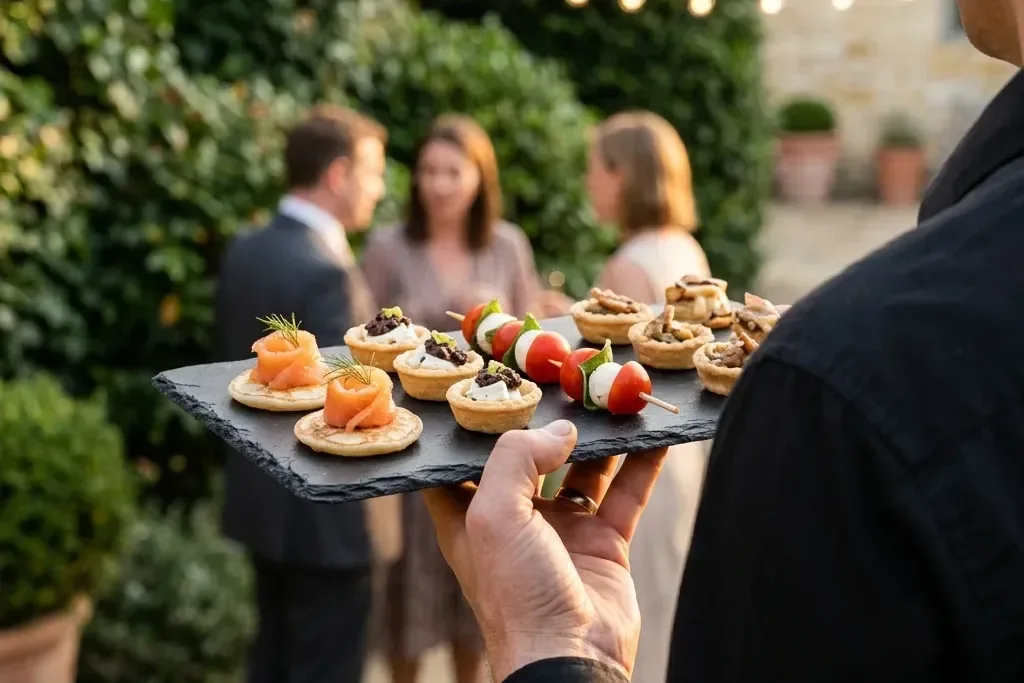
Start with the people who already know you
Your first clients are almost never strangers. They’re the people who already trust you as a person and now find out you cook. Before you spend a dollar on ads, work your own network deliberately.
- Tell everyone what you’re doing — specifically. Not “I’m starting a business,” but “I’m catering events now — buffets, drop-off, small weddings. If you or someone you know has something coming up, I’d love a shot at it.” Vague announcements get vague responses. A specific ask gets referrals.
- Go through your phone and social contacts on purpose. Family, friends, former coworkers, your gym, your place of worship, the parents at your kid’s school. Someone in there is planning a birthday, a shower, an office lunch, a memorial, a graduation in the next few months.
- Say yes to the small, unglamorous jobs. A 20-person office lunch or a backyard birthday isn’t beneath you when you have zero events under your belt. It’s a controlled setting to prove you’re reliable, and it produces your first photos, your first review, and your first referral.
The people who already like you are willing to take a chance on you. That’s the crack in the door. Your job is to walk through it and not disappoint them.
Cater a few events flawlessly — proof beats promotion
Early on, one perfectly executed event is worth more than a month of posting. Every job in this stretch is doing double duty: it feeds the client and it builds the evidence that books the next client.
Treat your first several events as your portfolio being built in real time. Show up early, hold your food at temperature, plate it clean, handle the small disasters without the guests noticing, and leave the space cleaner than you found it. While you’re there, quietly gather what you’ll need to book the next job:
- Photos. Of the spread, the plating, the setup — before guests hit the buffet. Good photos of real food you actually made are the single most persuasive thing on your website or profile. You don’t need a photographer; a clean phone shot in decent light does it.
- A testimonial, asked for while the glow is fresh. The best moment to ask a happy host for a few sentences is the day after the event, not three weeks later. “So glad you loved it — would you mind writing a couple of lines I can share? It means a lot to a new caterer.”
- The names of their guests who complimented the food. Which leads to the next section.
Flawless execution is your marketing budget. Spend it well and the events start referring themselves.
Get found locally and turn events into leads
Once you’ve got a couple of events and a few photos, make yourself findable to the people searching in your area — and make every event you cater a source of the next inquiry.
Show up in local search. Set up a free business profile on the major maps and search platforms with your service area, a few real photos, and a way to contact you. When someone nearby searches for a caterer, you want to exist in that result. It costs nothing and it’s where a lot of cold inquiries start.
Get into your community’s channels. Neighborhood and local groups — the online ones where people ask “does anyone know a good caterer for a party of 40?” — are pure gold for a new operator, because the person asking is a buyer with a date. Be present, be helpful, and answer those posts fast. Local visibility beats a broad audience of strangers who’ll never book you.
Capture guests at the events you cater. Every event you work is a room full of future clients who are, at that moment, tasting your food. Make it effortless for them to find you later — a small stack of cards by the buffet, a discreet sign, a mention to the host that guests are welcome to ask for your info. The person raving about your short ribs tonight is planning their own event in six months. Give them a way to remember your name.
Reviews, referrals, and vendor relationships
This is the engine that takes you from ten clients to a full calendar, and it compounds. Because catering is a trust purchase, word of mouth isn’t a nice-to-have — it’s the primary way you’ll grow, and it builds on itself when you feed it.
Make asking for referrals a habit, not an accident. After a job goes well, ask directly: “If you know anyone else planning something, I’d be grateful for the introduction.” Happy clients are usually glad to help — they just need to be asked. Reviews work the same way: point clients to wherever you want them (your business profile, your page) and make it a one-tap ask while they’re still delighted.
Build relationships with the vendors who touch the same events you do. These people talk to your future clients before you ever meet them, and they’re asked for recommendations constantly:
- Venues. A venue that trusts you will hand you a stream of bookings, because clients ask them “who should we use?” all the time. Being the caterer a venue recommends is one of the most durable lead sources in this business. Some keep preferred-vendor lists — earn your way onto them.
- Event planners. Planners book caterers repeatedly. Impress one and you’re not getting one job, you’re getting a relationship that feeds you work for years.
- Photographers, florists, rental companies, DJs. Everyone working the events you work is a potential referral partner. Be easy to work with on site — help them out, stay out of their way, make their job smooth — and they’ll remember you when a client asks for a caterer. Referrals flow both ways; send them work too.
Treat every vendor you meet at an event as a long-term relationship, not a one-off. The photographer you were kind to at a wedding this spring can send you three bookings by next spring.
You don’t need a fancy website — you need to quote fast
New caterers stall for months building the perfect website while losing the actual leads sitting in their inbox. Flip that. A simple, clean page with your photos, your service area, a short menu, and a way to reach you is plenty to start. The elaborate site can wait until you have events and reviews to fill it.
What actually loses you early bookings is being slow and clumsy with the price. When someone asks “what would you charge for 60 people?”, the caterer who sends a clear, professional quote that same day usually wins over the one who takes four days and sends a confusing text. Speed and clarity read as competence — exactly what a nervous first-time client is looking for. A fast, itemized, professional-looking quote does more to close an early client than any amount of web design.
So put your energy where the bookings are: execute a few events flawlessly, gather your proof, work your network and your local channels, and be the caterer who responds fast with a clean number. Nail your pricing and turnaround in quoting your first jobs, get ready for the volume in wedding and event season, and use the start hub to keep the rest of your launch in order.
Two things make that fast reply much easier to give. A published booking page lets a first-time client pick off your menu, set a headcount, and see a live estimate, so the inquiry that lands in the morning is already shaped like a quote instead of a paragraph you have to decode. And an event minimum is what stops the smallest of those early jobs from costing you money to accept, which matters most in the months when you are inclined to say yes to everything.
Frequently Asked Questions
- How do I get my first catering clients?
- Start with the people who already trust you: tell your network, cater a few small events (a friend's party, an office lunch, a community gathering) flawlessly, and ask each happy client for a referral and a review. Post where local buyers look — community and neighborhood groups, local search, a simple menu page — and make it dead easy to request a quote. Your first ten jobs come from circles and word of mouth, not paid ads.
- How do caterers find new customers?
- Mostly referrals, repeat clients, reviews, and local search. Catering is a trust purchase — a host risks their event on you — so word of mouth compounds: one flawless event books the next through the guests who were there. That is why on-time, safe, well-executed events are your real marketing. Vendor relationships (venues, planners, photographers) become a steady referral source once you have proven reliable.
- How important are reviews and referrals for a catering business?
- They are the whole engine early on. A handful of genuine five-star reviews and a few enthusiastic referrers often outperform any ad, because clients trust other clients over a sales pitch. Ask for a review the day after every event while the experience is fresh, and make referrals easy. Guests at a well-run event are your next inquiries — catch their contact and follow up.
- Do I need a website to start catering?
- Not a fancy one to book your first clients — a simple page or profile with your menu, photos, and a way to request a quote is enough, alongside a business social presence where locals find you. What you do need from day one is a fast, professional way to turn an inquiry into an itemized quote and a deposited booking, because speed and clarity are what convert a first-time client.
Quote your first job in minutes, not evenings
CaterKit is built for solo and small-crew caterers — photograph your menu, send a costed, branded quote the same night, and walk into event day with auto-built shopping and prep lists. The Free tier handles 2 events a month, enough to book your first jobs, with no card required.
Get this as a 7-day course
One short email a day, the whole start-to-first-job path, written for someone doing this for the first time. Unsubscribe with one tap, any time.
You're in. Day one lands within a day. Check the promotions tab if it hides.
That didn't send. Check the address and try once more.