
Pricing custom wedding cakes and dessert tables
A custom wedding cake is priced by the serving, not by the tier, and the servings, the fillings and the sugar work move the number far more than the height does. This page is for made-to-order cake work: one cake designed for one wedding, quoted like the event it belongs to.
What follows is the costing walked end to end. What a single serving really costs once hand work is loaded onto it, the margin the classic food-cost band actually implies for cake work, how to size a cake from a cutting chart instead of a guess, how a dessert table prices beside it, and the delivery, assembly and design-lock terms that keep a custom order from drifting. Every figure below is computed by the same costing engine the margin calculator runs.
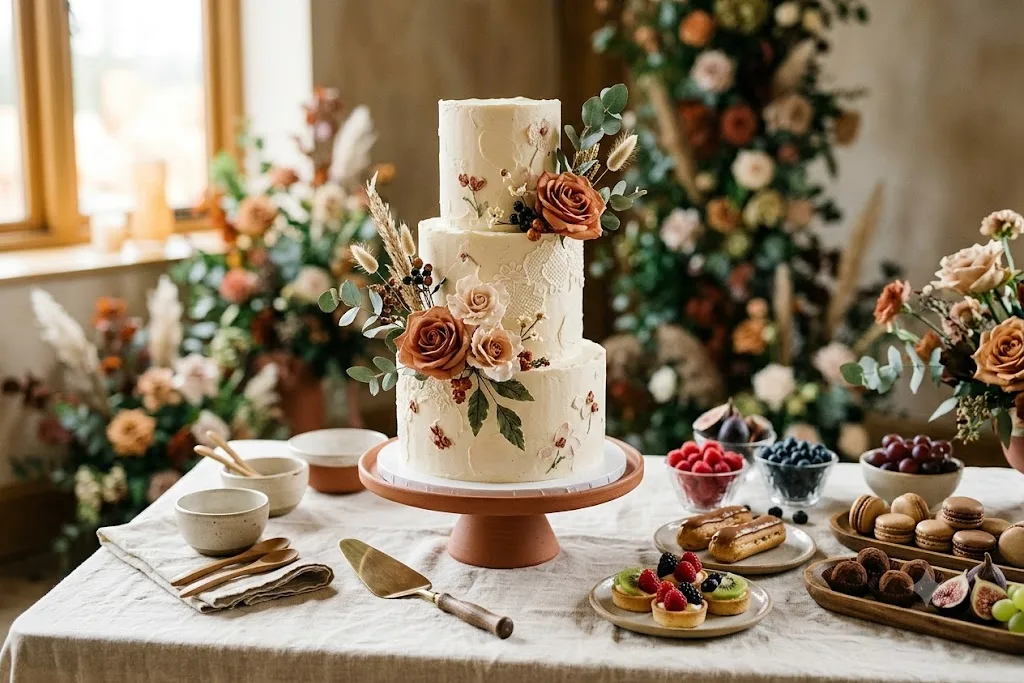
Price a custom wedding cake by the serving. On the worked example here, $3.50 of ingredients carrying 40% labor and 20% overhead loads to $5.60 a serving, and a 45% margin target prices that serving at $10.19, or $1,019.00 for a hundred-serving cake. Sugar work and structure move the labor load, not the flour.
The worked number
Food-cost percentage
34%
Margin after labor & overhead
45%
What the portion really costs, loaded
$5.60
One made-to-order serving: $3.50 of ingredients, labor at 40% and overhead at 20% of ingredient cost, priced to a 45% margin target.
Price by the serving, not by the tier
Start from a per-serving price and multiply by the number of servings you are cutting for. Tiers are a design decision and a structural one; they are not a unit of sale, and two cakes with identical tier counts can differ by a full day of hand work. A tiered cake and a sheet cake for the same headcount can cost the same in ingredients and nothing alike in hours.
The per-serving rate is where the design lives, so let the design set it rather than carrying one flat rate for every order. Publish a base rate for a clean buttercream finish, a named rate for fondant, and a quoted rate for anything with hand-painting, sugar flowers or internal structure. A couple who can see three rates understands why their cake is priced where it is.
What one serving actually costs
Cost a serving the way you would cost a plated dish. On the worked example here, $3.50 of ingredients carries 40% labor and 20% overhead, which loads the serving to $5.60 before a cent of margin is added. That load is the whole story of cake pricing: the hand work costs more than the butter, and a cake priced off ingredients alone pays for the wedding rather than for you.
At a 45% margin target that serving prices at $10.19, which is $1,019.00 for a hundred servings and $1,528.50 for a hundred and fifty. Run your own numbers rather than borrowing those. The ingredient figure moves with your recipe and the labor percentage moves with how you actually work, and the labor percentage is the input most cake makers underestimate by half.
The margin the 28–35% rule implies for cake work
The classic food-cost band is a useful check here, and it is more demanding than it sounds. That same serving at a 45% margin target lands at 34% food cost, just outside the band. Raising the target to 55% prices the serving at $12.45 and brings food cost to 28%, which is inside it.
Heavier work moves the same serving again. Price it to a margin of 65% and it lands at $16.00, a food cost of 22%, which is roughly where a heavily decorated cake honestly sits once the sugar flowers are counted as hours instead of as flair. The percentage is a compass and the dollars are the destination, so use the band to sanity-check a rate rather than to set one.
Where the hours actually go
Fillings, specialty flavors and anything done by hand are where a cake stops being baking and starts being a build. Sugar flowers are made days ahead and set one at a time. Fondant needs a flawless crumb coat under it. Sharp edges, internal doweling, a tall tier that has to travel and hand-painting all add hours that never appear anywhere on the ingredient sheet.
Time yourself once on a real order, from first bake to final dowel, and turn that number into your labor percentage. Most cake makers who do this find the figure is well above the one they had been carrying, which is exactly why a busy season of beautiful cakes can end with nothing in the account. Measure the hours on the work you actually sell, not on the simplest cake you make.
Sizing the cake: servings, the chart, and the top tier
Servings are a cutting decision before they are a size decision, so agree the serving size in writing. A standard wedding serving and a generous dessert-course serving are different cakes at the same tier count, and a venue that cuts to its own chart will make a cake sized to yours look small on the night. Send the cutting chart you priced against along with the quote.
Then decide what the top tier is for. A tier the couple takes home is not a tier the guests eat, so either size the cake for the guest count plus that tier or say plainly that the count includes it. The same goes for a display tier that is not cake at all: a foam dummy is cheaper in ingredients and no cheaper whatsoever in finishing hours.
A dessert table prices the same way
Price a dessert table by the serving too, then set the piece count per guest rather than the tray count. Two to three small items a head is a common planning range when a cake is also being served, and more when the cake is small or absent. Cost each item on its own sheet, because a tray of macarons and a tray of brownies are not the same product at all.
Mini pastries carry the same shape of cost as cake: modest ingredients, heavy hand work, and a finishing pass that scales with the piece count rather than with the weight. Run each one through the same loaded-cost math and set the same margin target, then quote the table as a per-guest figure beside the cake instead of as a flat price the couple has no way to compare.
Delivery, assembly, and the cutting
A wedding cake is delivered, assembled on site, and often cut and plated by somebody. Each of those is a line. Delivery is a slow careful drive with a boxed cake and a level surface, assembly is time on site in a room that is rarely ready, and cutting is service labor during the reception. Quote all three rather than absorbing them into the per-serving rate.
Ask about the venue before you price the drive: the door you load through, the elevator, the temperature of the room the cake will stand in for four hours, and who is responsible for the table and the stand. A summer reception in a tent with no air conditioning is a different product from the same cake in a cool hotel ballroom, and the difference belongs in the price rather than in your afternoon.
Deposits, design changes, and the lock date
A custom cake is booked for a date, and the date holds only when money holds it. Take a deposit on booking, name the balance date, and put an expiry on the proposal so a quote written a year out cannot be held to after two seasons of ingredient prices. A hundred-and-fifty-serving cake at $10.19 a serving is an order of $1,528.50, which is enough money to deserve written terms.
Then set a design lock date, usually a few weeks out, after which changes are quoted rather than absorbed. Couples change their minds late and almost always toward more work, and a cake maker who says yes to every change is donating the hours that were the margin. Write the lock date on the proposal, hold it kindly, and price the changes that arrive after it.
Made-to-order work, not a production line
This costing fits custom, per-event cake work: celebration and wedding cakes designed one at a time and quoted like the event they belong to. The labor percentage is high because every order is a new build, and the margin target has to be high with it. That is the economics of bespoke work, and it is the reason a custom cake costs several times what a supermarket one does.
It is not built for wholesale or high-volume batch baking, where the same recipe runs by the hundred into a retail case and the labor per unit falls with every tray. That is a different trade with a different rhythm and a different sheet. If your work is bespoke and event-driven, price it here alongside the rest of the day.
Get exact costs from YOUR recipes
These are market ranges. CaterKit photographs your menu, costs every recipe from your ingredients, and prices the quote at your margin — free to start.
Frequently Asked Questions
How much should I charge per serving for a wedding cake?
Cost the serving loaded and set a margin on top rather than copying a market rate. The worked example here loads $3.50 of ingredients to $5.60 with labor and overhead, and a 45% margin target prices it at $10.19. Heavier decoration should carry a higher rate, not the same one.
How much does a 100-serving wedding cake cost?
On the worked example, $1,019.00 at $10.19 a serving for a clean finish, before delivery, assembly and cutting. Sugar flowers, fondant and hand-painting move the per-serving rate rather than the ingredient cost, so a heavily decorated cake of the same size prices well above that.
What food cost percentage should a custom cake run at?
The classic 28–35% band works as a check, and reaching it takes a higher margin target than most cake makers expect. The worked serving lands at 34% food cost at a 45% margin target, and at 28% once that target rises to 55%.
Should I charge extra for delivery and cake cutting?
Yes, and on separate lines. Delivery is a slow careful drive plus assembly time on site in a room that is rarely ready, and cutting is service labor during the reception. Folding all three into the per-serving rate makes the cake look expensive and makes the extras look free.
How do I count servings for a tiered wedding cake?
Agree the serving size in writing and send the cutting chart you priced against, because a venue cutting to its own chart will make your cake look small. Decide as well whether the top tier the couple takes home sits inside the guest count or on top of it.
How should I handle design changes after the cake is booked?
Set a design lock date a few weeks before the wedding and quote changes after it rather than absorbing them. Late changes almost always add work, and a cake maker who says yes to every one of them is giving away the hours that were the margin.